Dirt or crawl space foundation testing high? We seal it and depressurize it — a sub-membrane system that pulls radon out of the ground and dries the space out at the same time.
Call (970) 639-7503Tell us your test result and roughly how big the crawl space is, and we'll give you a firm price to seal and depressurize it. Call (970) 639-7503 or send the form.
Crawl spaces are one of the most radon-prone foundation types because, in most cases, the only thing between your home and the soil is a few feet of open air over bare dirt. Radon comes from uranium in the ground decaying into radium and then into radon gas, which rises straight out of exposed earth. In a crawl space that gas has nothing to stop it — it fills the cavity and then works its way up through floor gaps, plumbing and wiring penetrations, ductwork, and the general stack effect that pulls air from the ground level into the living space above.
Here in the Grand Valley, that matters more than it does in most of the country. Mesa County sits in EPA Radon Zone 1, the highest of the three national zones, and roughly a third of the local homes tested through the state program come back at or above the EPA action level of 4.0 pCi/L. A home over uranium-bearing Colorado Plateau rock with an open crawl space is close to a worst case for radon entry — and it's exactly the kind of foundation we treat most weeks. If you'd like the geology behind the numbers, we cover it on why the Grand Valley tests high.
An older vented crawl space makes the problem worse in winter. When the furnace runs and warm air rises, the house pulls make-up air from the lowest, leakiest point — the crawl space — and drags soil gas up with it. Closing the vents alone doesn't fix radon; it can even concentrate it. The reliable fix is to seal the floor and put the soil under active suction.
The standard fix for a crawl space is sub-membrane depressurization (SMD) — the crawl space cousin of the sub-slab systems we install under basements and slabs. Instead of drilling through concrete, we create a sealed barrier over the dirt and pull the radon out from beneath it.
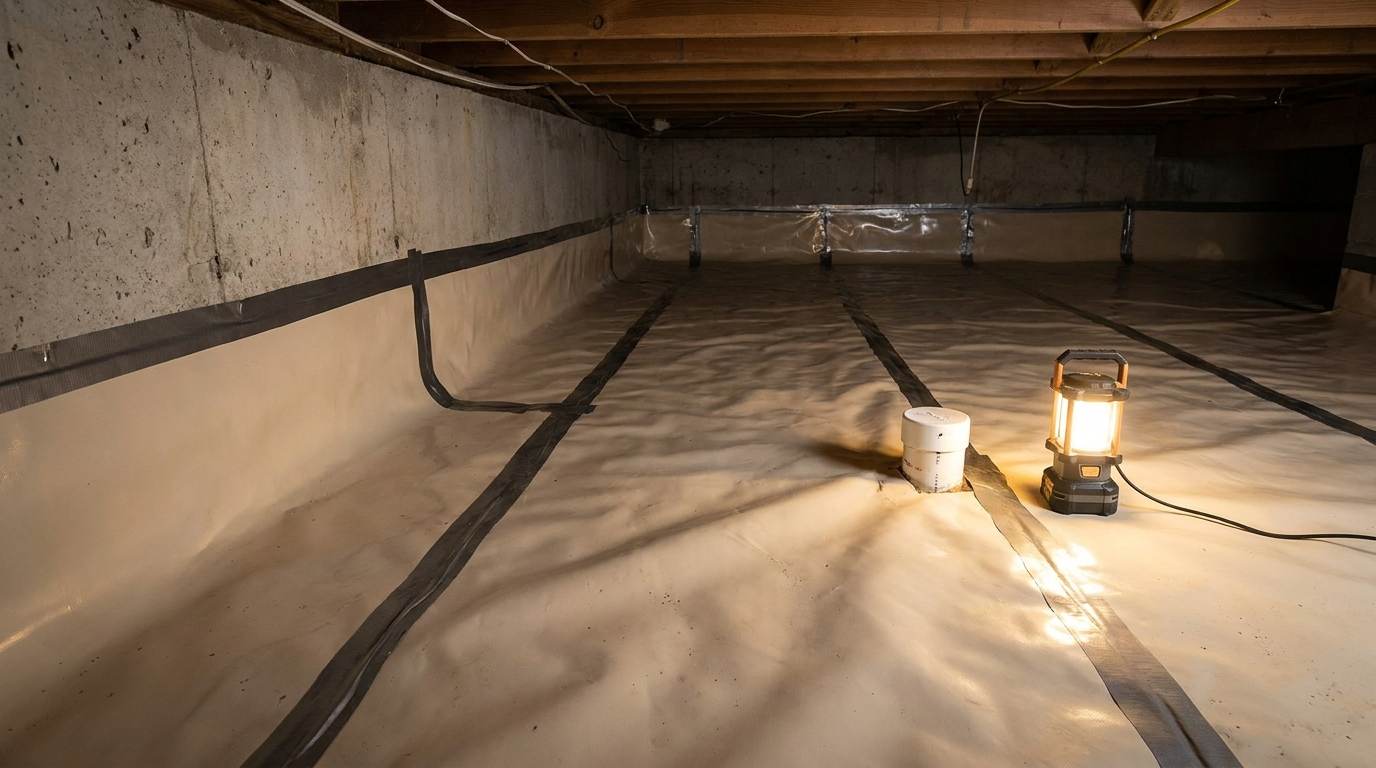
A crawl space install with Grand Junction Radon includes:
Once it's running, the fan holds the ground under the membrane at slightly lower pressure than the crawl space, so radon follows the pipe out instead of seeping up into your floors. It's the same dependable physics as a slab system — the barrier just does the job the concrete does in a finished basement.
The sealed membrane that makes a crawl space radon system work is the same membrane used for crawl space encapsulation, so the two jobs pair naturally. Encapsulation is the practice of fully lining a crawl space — floor and walls — to shut out ground moisture and soil gas. On its own, encapsulation is a moisture and air-quality upgrade; it is not, by itself, a radon fix. Radon needs the active suction that pulls gas from under the liner. But when we tie a properly sealed encapsulation into a depressurization fan, you get both results from one project.
That combination pays off beyond the radon number. A sealed, depressurized crawl space blocks the ground moisture that drives high humidity, wood rot, and that musty smell that so often reaches the main floor. Drier air under the house is easier to heat and cool, discourages mold, and protects insulation, joists, and ductwork. Homeowners who came to us worried only about a radon result frequently notice a fresher, drier house afterward. We're careful to be clear about which is which: the system is designed and verified to lower radon first, and the moisture benefit comes along with doing that job correctly.
The goal is identical for every foundation — get radon out of the ground before it reaches the air you breathe — but the method changes with what's under your feet. A finished basement or slab home already has concrete acting as the seal, so a sub-slab depressurization system just cores through it and draws from the gravel below. A crawl space has no such seal, so we have to build one with the membrane before the fan has anything to pull against.
Some Grand Valley homes are mixed — a slab-on-grade section next to a crawl space addition, or a basement with a crawl space under a back room. Those need a combined design so both areas are covered, which is exactly the kind of layout we plan for during diagnostics.
A crawl space system generally costs more than a standard slab install because there's more material and labor: a full vapor barrier to seal instead of a single cored hole. A standard residential sub-slab system in the Grand Junction area runs about $1,500 to $3,000, and crawl space or sub-membrane work sits at the upper end of that range or above. The biggest cost factors are:
We give a firm, written price after we see the space — no guessing over the phone and no surprises on install day. For the full breakdown of what goes into a system and what it costs to run, see our radon mitigation cost guide. If you haven't confirmed your level yet, start with radon testing.
If your crawl space came back high, we'll show you exactly how we'd fix it and what it costs — today, with a firm price and no pressure.
(970) 639-7503Most crawl spaces are fixed with sub-membrane depressurization. We lay a sealed vapor barrier over the dirt floor, run a suction point and PVC pipe beneath it, and connect an inline fan that runs continuously. The fan holds the soil under the membrane at slightly lower pressure than the crawl space, so radon is pulled from the ground and vented above the roofline instead of drifting up into your home. A post-mitigation test confirms the level dropped below 4.0 pCi/L.
They overlap but aren't the same. Encapsulation is a heavy sealed liner over the crawl space floor and walls that controls moisture; radon mitigation adds the suction point and fan that actively pull soil gas out from under that liner. For radon, encapsulation alone is not enough — the membrane has to be tied into an active depressurization system to reliably lower the number. The good news is one crew can do both at once, and the same sealed barrier serves both jobs.
Crawl space systems generally cost more than a standard slab system because they involve sealing a full vapor barrier and, often, more than one suction point. A standard residential sub-slab system in the Grand Junction area runs about $1,500 to $3,000; crawl space and sub-membrane work sits at the upper end or above depending on square footage, access, and whether you also want full encapsulation. We give a firm written price after we see the space. See our cost guide.
Usually yes. The sealed membrane that makes the radon system work also blocks ground moisture and soil odor from rising into the crawl space, which cuts humidity, discourages mold, and helps the musty smell that often reaches the main floor. Moisture control is a real side benefit of doing the job right, but the system is designed and verified first and foremost to lower radon.