Buying, selling, or just want to know what's in the air your family breathes? We run accurate, professional radon tests across the Grand Valley — and tell you plainly what the number means.
Call (970) 639-7503Tell us whether it's for a home sale, peace of mind, or confirming a repair, and we'll get a monitor placed fast. Call (970) 639-7503 or send the form.
You test because you cannot see, smell, or taste radon, and the only way to know your home's level is to measure it. Mesa County sits in EPA Radon Zone 1 — the highest of the three national zones, with a predicted average indoor level above the 4.0 pCi/L action level. Statewide, the Colorado Department of Public Health and Environment reports that about half of Colorado homes have radon above the EPA action level, and in Mesa County roughly a third of the homes tested through the state program come back at or above 4.0 pCi/L. Those are county numbers, though — they can't tell you what's happening in your house. A test can.
Radon is the second-leading cause of lung cancer overall and the number one cause among people who have never smoked. It builds up quietly, year after year, and the risk is cumulative. A single professional test, done right, turns an invisible unknown into a number you can act on — and if that number is low, it buys you real peace of mind for the cost of a nice dinner out.
The difference comes down to how long the monitor sits and what question you're answering. A short-term test runs a minimum of 48 hours and gives you a fast snapshot. A long-term test runs 90 days or more and gives you the most accurate picture of your true year-round average.
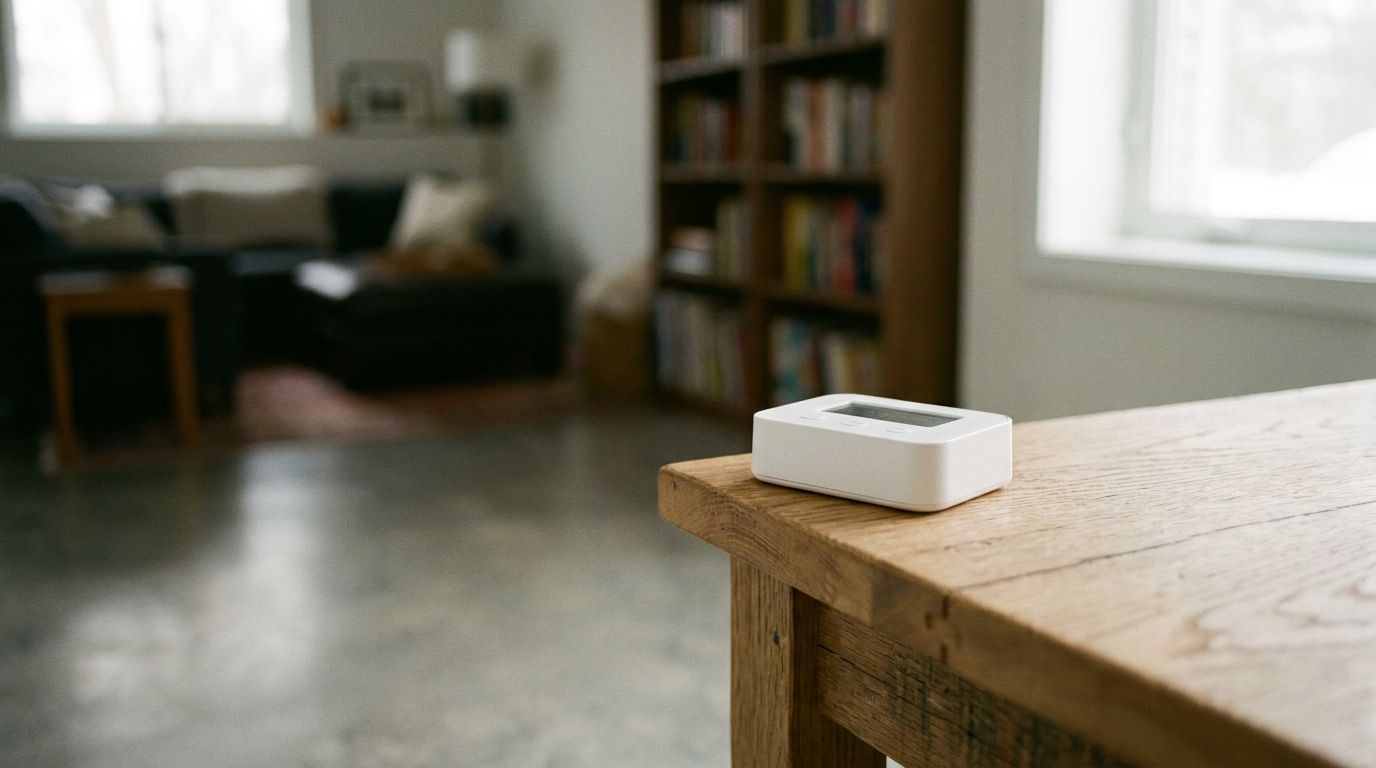
Choose a short-term test when:
Choose a long-term test when:
For most real-estate transactions, a 48-hour short-term test is the standard and it's what buyers, sellers, and agents expect. For a home you already live in and simply want to understand, a long-term test is the gold standard — but a short-term test is a perfectly good place to start.
A professional test uses calibrated equipment and follows a protocol; a drugstore kit relies on you to get everything right and mail it off in time. Both can produce a number, but only one produces a number you'd stake a home purchase on.
Hardware-store kits are inexpensive and, used carefully, can give you a rough first screen. The catch is that the result depends entirely on correct placement, uninterrupted closed-house conditions, and prompt shipping to the lab. A kit knocked off a shelf, left near a window, or delayed in the mail can hand you a reading that's meaningfully wrong in either direction. And a false low is the dangerous kind — it tells you you're safe when you may not be.
A professional test with Grand Junction Radon uses calibrated continuous radon monitors that log hourly readings, follow AARST measurement protocol, and are placed and retrieved by someone who does this every day. You get a clear written report, tamper-resistant records that hold up in a real-estate deal, and a person on the other end of the phone to explain exactly what it means. If you're making a decision that costs thousands — buying a house, or spending on mitigation — the professional test is the cheap part.
Radon is measured in picocuries per liter of air (pCi/L). The EPA's action level is 4.0 pCi/L: at or above that, the EPA recommends installing a mitigation system. Below it, you're in better shape — but the number still matters.
One honest note: a single short-term test is a snapshot, not a verdict. If a first result lands close to the line, the right move is often a second test rather than a snap decision either way. We'll tell you which situation you're in — we're not here to sell a system to someone who doesn't need one.
When a home is under contract, the standard is a 48-hour short-term test run under closed-house conditions, and timing is everything. Inspection periods are short, and a radon result can shape who pays for what, so the test needs to be scheduled, run, and reported inside the window — not squeezed in at the last minute.
We test on real-estate timelines all the time and coordinate directly with buyers, sellers, and agents so the result lands when it's needed. If the number comes back elevated, we can move straight into a mitigation quote and, in many cases, install before closing so the deal stays on track. Colorado also has specific radon disclosure rules that sellers have to follow, and a documented test is central to meeting them. We break the whole process down on our radon and real estate page.
After a mitigation system goes in, you verify it with a fresh radon test — because the point was never the pipe on the wall, it was the number in the air. A properly designed active sub-slab depressurization system routinely pulls radon from double-digit readings down to well below 4.0 pCi/L, but you confirm it rather than assume it.
Every mitigation job we do ends with a post-mitigation verification test, and it's included in the price. You get documentation showing the level before and after, which matters twice: once for your own peace of mind, and again when you sell, because a documented drop is exactly what a future buyer and a Colorado disclosure form want to see. If a verification test ever comes back higher than it should, that's on us to fix — if it isn't fixed, we're not finished. If you've inherited a system from a previous owner or a builder and want to know it's actually working, we also handle system checks and fan replacement.
A professional radon test is the cheapest insurance you'll buy on your home. Let's get a monitor placed this week and get you a real number.
(970) 639-7503Don't panic — an elevated result is common here and it is completely fixable. Roughly a third of tested Mesa County homes read at or above the action level, and every one of them can be brought down with a properly designed system. A high number is not a reason to lose sleep or to walk away from a house; it's a maintenance item with a known, reliable fix.
Here's the path from a high test to clean air: confirm the reading, get a firm mitigation quote based on your foundation, install the system (usually a single visit of three to five hours), then verify with a follow-up test. Start on our radon mitigation page to see how the system works, check real numbers on the cost page, or just call us and we'll walk you through it. Whatever your result, you'll leave the conversation knowing exactly where you stand and what, if anything, it takes to fix it.
A short-term test runs a minimum of 48 hours, and that's the type most people use, especially during a real-estate transaction. The house stays under closed-house conditions the whole time. A long-term test runs 90 days or more and gives the most accurate picture of your year-round average, because radon levels swing with the seasons and the weather.
A hardware-store kit can give you a rough first screen if it's used exactly to the instructions and mailed to the lab promptly. But results depend entirely on placement, timing, and closed-house conditions, and a mailed kit can be skewed by mishandling. A professional test uses calibrated continuous monitors, follows AARST protocol, and produces a tamper-resistant report you can trust for a home sale or a mitigation decision.
Radon is measured in the lowest livable level of the home, whether or not you use it every day, at least 20 inches off the floor and away from drafts, exterior walls, and vents. In the Grand Valley that usually means a basement or a ground-floor room. If you have a finished basement bedroom or family room, that's exactly where the number matters most.
You can. The one rule is closed-house conditions: keep windows and exterior doors shut except for normal entry and exit, and don't run whole-house fans or fireplaces that pull in outside air. You can cook, run the furnace or AC, and live normally otherwise. We place the monitor, you go about your routine, and we retrieve it after the test window.
A professional short-term test is a modest, flat fee, and it's the cheapest insurance you'll buy on a house. Call us at (970) 639-7503 for a current price. If your test comes back elevated and you move ahead with mitigation, the post-mitigation verification test is built into the job, so you're not paying twice to confirm the fix worked.