How Much Does Radon Mitigation Cost in Grand Junction?

No sticker shock, no vague ranges. Here's what a radon system actually costs in the Grand Valley, what moves the price, and how to make sure the low bid isn't the expensive one.

Call (970) 639-7503
Firm written quotes · No high-pressure sales visit · Verification test included
Licensed Colorado Radon Pros
NRPP / AARST Standards
Results Guaranteed

Get a Firm Price, Not a Guess

Tell us your radon level and foundation type and we'll give you a real, written number — the same one you'll pay. Call (970) 639-7503 or send the form.

  • Written pricing before any work begins
  • No surprise add-ons after we start
  • Post-mitigation verification test included

The Short Answer

Most standard residential radon mitigation systems in the Grand Junction area run about $1,500 to $3,000 installed. Crawl space, sub-membrane, and multi-suction systems cost more because they take more material and labor. The only way to know your exact number is a look at your foundation and a firm written quote.

Last updated July 2026 · Pricing reflects typical Grand Valley residential installs.

Radon Mitigation Cost by System Type

Here's how pricing breaks down by the kind of system your home needs. These are typical installed ranges for the Grand Valley; your firm quote depends on the specifics below.

System typeTypical installed priceWhen it's used
Standard sub-slab depressurization$1,500 – $3,000Most homes with a basement or slab foundation and a single suction point.
Multi-suction sub-slab$2,800 – $4,500+Larger homes, poor sub-slab communication, or additions that need a second or third suction point.
Crawl space (sub-membrane)$2,800 – $5,000+Dirt or gravel crawl spaces sealed with a membrane, then depressurized.
Crawl space encapsulation + radon$4,500 – $8,000+Full sealed liner with moisture control, bundled with radon depressurization.
Add-on: upgraded / high-suction fan+$150 – $400Homes with tight soil that need a stronger fan class to hit the target.
Add-on: interior finish / cosmetic routing+$200 – $800Concealing pipe through finished space or a garage instead of an exterior run.
Post-mitigation verification testIncludedConfirms the system brought your level below 4.0 pCi/L. Always part of our job.

A standard single-family home with a basement and good sub-slab communication almost always lands in that first row. The rows below it exist because not every house is built the same — and an honest quote reflects what your house needs, not a flat menu price.

What Drives the Price Up or Down

The final number comes down to how hard it is to get radon out from under your specific home. A few factors do most of the work:

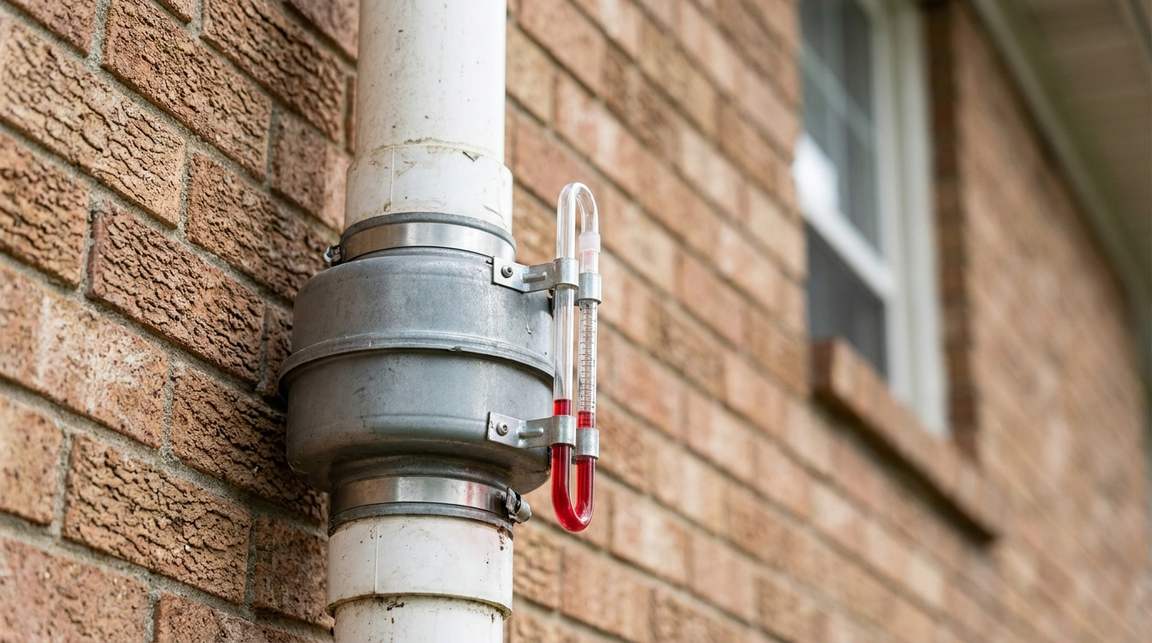
Radon pipe routed up an exterior wall

This is exactly why a real quote beats a phone-guess. Two houses on the same Redlands street can price differently based on what's under the slab. We look before we quote — and then the quote holds.

What It Costs to Run the Fan

Almost nothing — a radon fan runs 24/7 but sips power like a light bulb. The system has to run continuously to keep the soil under your home at lower pressure than the living space, so people reasonably wonder what that does to the electric bill. In practice it's a few dollars a month.

There's a small secondary cost: because the system moves a little conditioned air, you may see a minor bump in heating and cooling. On a properly sized install that effect is small, and an oversized fan is one of the things a careful designer avoids precisely to keep it that way. Weigh a few dollars a month against a permanent reduction in your family's lung-cancer risk and the running cost stops being part of the decision.

What's Included in Our Price

Our quote is the finished, working system — not a starting point that grows once we're on site. A standard install with Grand Junction Radon covers the whole job:

Most installs are done in a single visit of three to five hours, and you don't need to leave the house while we work. Curious how the system actually pulls the gas out? Our radon mitigation page walks through it, and if you haven't tested yet, start with radon testing.

Want Your Actual Number?

Tell us your radon level and foundation type and we'll give you a firm, written price today — no sales visit required.

(970) 639-7503

Why the Cheapest Bid Isn't Always the Cheapest

The lowest number on a quote can quietly become the most expensive one you pay. A radon system is only worth what it does — and what it does is measured by the test at the end, not the price at the beginning. A bid that skips diagnostics, undersizes the fan, or cuts the verification test can leave you with a pipe on the wall and a radon level that's still above the action level.

When that happens, you're not saving money; you're paying twice — once for the system that didn't work, and again for someone to come fix it. We've seen underperforming installs from crews that raced to the bottom on price, and correcting them is a real part of our system repair work. The questions worth asking any radon contractor: Are you a licensed Colorado radon professional? Do you pull permits? Is a post-mitigation verification test included, in writing? A "yes" to all three is what makes a price honest. Colorado has required radon mitigation pros to be state-licensed since 2022, and that license is the floor, not a bonus.

Radon Mitigation Cost FAQ

What is the average cost of radon mitigation in Colorado?

For a standard residential system, most Colorado homeowners pay somewhere between $1,500 and $3,000 installed, and the Grand Junction area sits right in that range. Crawl space, sub-membrane, and multi-suction systems cost more because they take more material and labor. The only way to know your number is to have the foundation looked at and get a firm written quote.

Will homeowners insurance pay for radon mitigation?

Almost never. Standard homeowners policies treat radon mitigation as a home improvement rather than sudden, accidental damage, so it's not typically a covered claim. The good news is that mitigation is a one-time cost for a permanent fix, and in a real-estate deal it's frequently negotiated into the transaction so the buyer or seller shares it. Ask us how it usually shakes out.

Why is radon mitigation so expensive?

It's skilled work, not just a fan on a pipe. A proper system means diagnostics to find the right suction point, coring through the slab, sealed piping routed up and out above the roofline, a correctly rated continuous fan, sealing of cracks and sump lids, an electrical connection, permits, and a verification test to prove it worked. Priced against a permanent reduction in lung-cancer risk and a documented asset at resale, most homeowners find it reasonable.

What does it cost to run the radon fan each month?

Very little. A radon fan runs continuously, 24/7, but it draws about the same power as a standard light bulb, so most homeowners see only a few dollars a month on the electric bill. There's a small heating and cooling effect from the air the system moves, but on a properly designed install it's minor. It's one of the cheapest safety systems in your house to operate.

How much does radon mitigation cost for a crawl space?

Crawl space mitigation generally costs more than a standard slab system because it uses sub-membrane depressurization: a heavy sealed vapor barrier is laid across the crawl space floor and connected to the suction and fan. The added material and labor push the price up, and a full crawl space encapsulation adds more. Expect to start above the standard sub-slab range; we quote it firm after we see the space.
Tap to Call — (970) 639-7503