Radon Testing & Mitigation for Clifton Homes
Clifton takes its name from the cliffs that loom over it — the Book Cliffs that wall off the north side of the Grand Valley. That dramatic backdrop is a clue to the ground beneath the neighborhoods: the same uranium-bearing sedimentary rock of the Colorado Plateau that produces radon across all of Mesa County. Clifton is an unincorporated community, but it shares the county's EPA Radon Zone 1 status, the highest-risk designation on the national map, with a predicted average indoor level above the 4.0 pCi/L action level and roughly a third of local homes testing elevated.
For Grand Junction Radon, Clifton is practically next door. Sitting just east of Grand Junction along Highway 6 & 50 and I-70 Business, it's only about 10 minutes from our base — the closest of the east-valley communities we serve. Clifton is one of the most densely populated parts of the valley, packed with modest single-family homes, manufactured and modular houses, and newer subdivisions filling in around the corridor. That density means a lot of homes, a lot of untested slabs and crawl spaces, and a lot of families who've never checked their number.
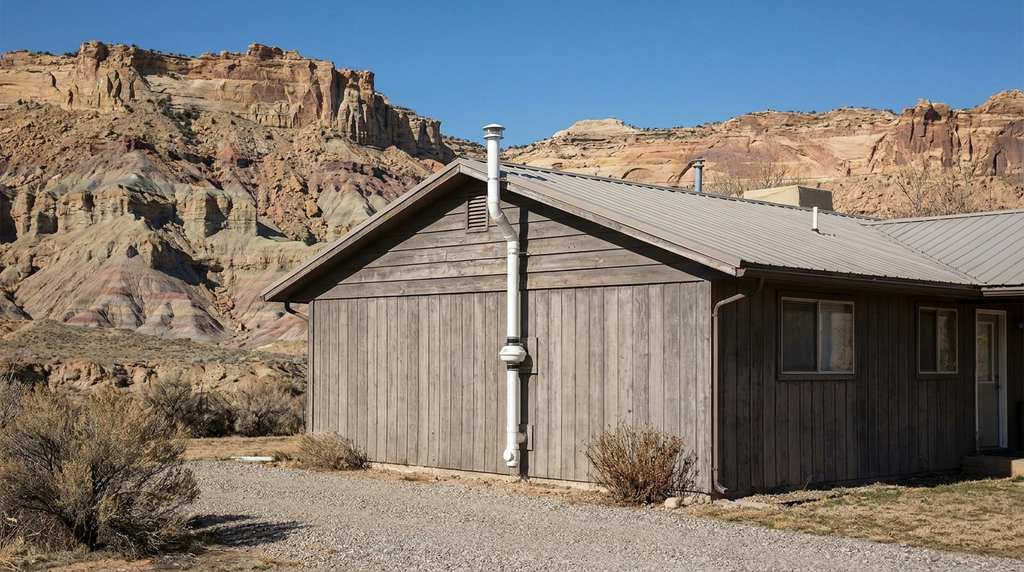
Why Clifton homes test the way they do:
- The cliffs are the tell. The Book Cliffs are stacked sedimentary rock — the same Colorado Plateau geology that carries uranium and produces radon.
- Uranium to radon. Uranium in the soil decays into radium and then radon gas, which seeps up through slab cracks, crawl space soil, and sump pits.
- Age doesn't protect you. Older homes and brand-new subdivisions alike draw radon from the ground; only a test tells you which houses are high.
Radon is the second-leading cause of lung cancer overall and the number one cause among people who have never smoked, and statewide the Colorado Department of Public Health and Environment reports that about half of Colorado homes test above the action level. In a community as tightly built as Clifton, testing is cheap, quick, and worth doing — and if the number is high, a mitigation system settles it for a few thousand dollars.